At a glance
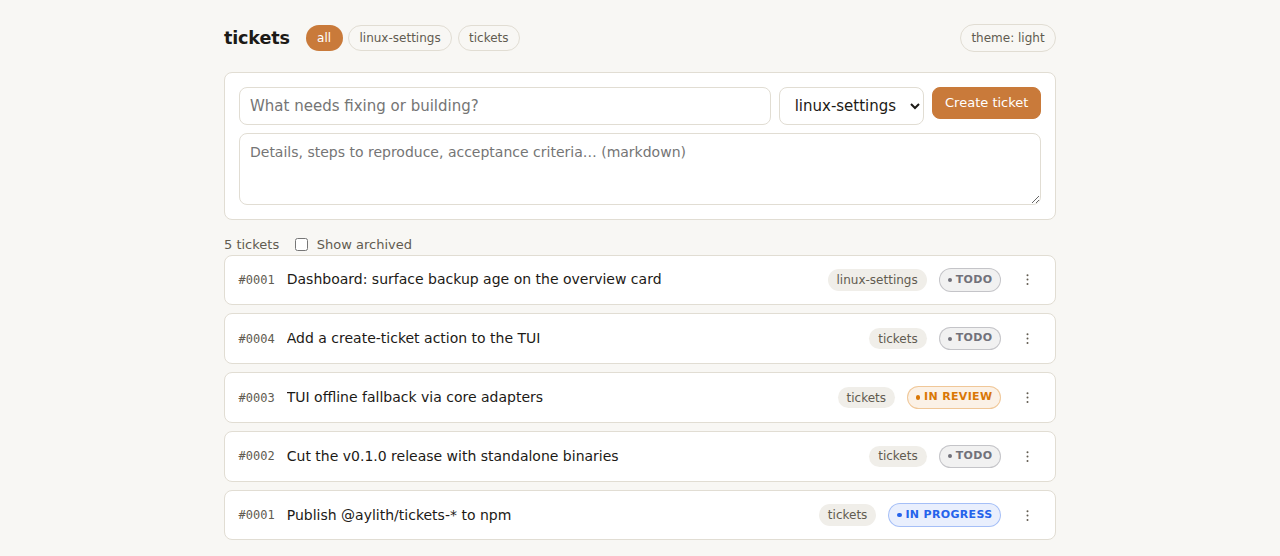
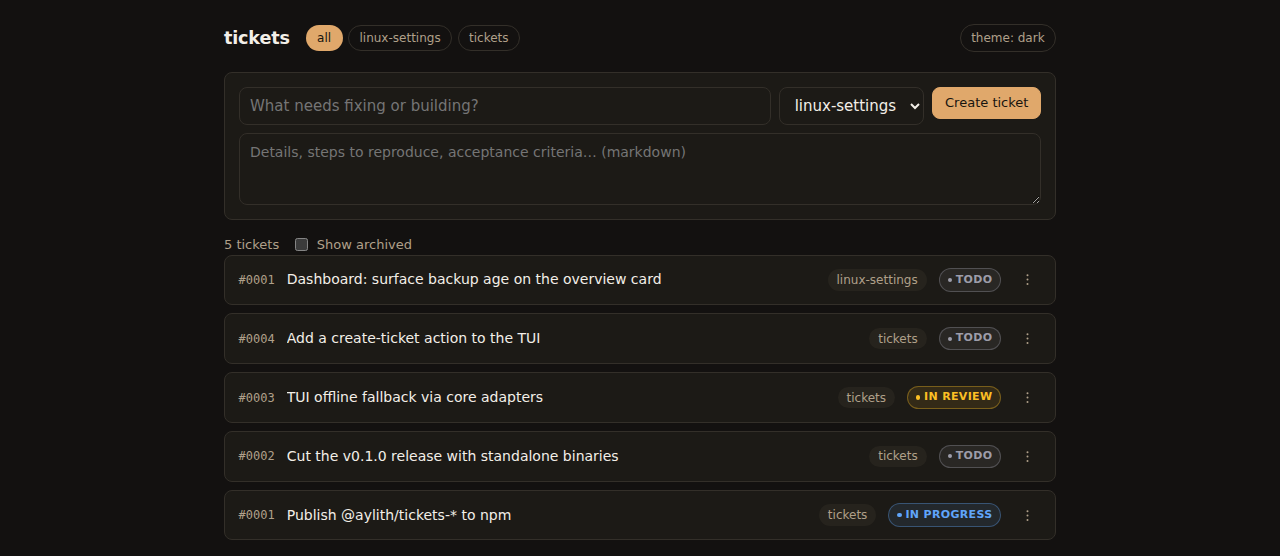
A pluggable personal issue tracker that turns "I should fix that" moments into agent work. File a ticket in the browser or a terminal TUI, then copy a composed prompt or open a terminal already running your coding agent on it — with optional AI enrichment, Git-backed history for Git stores, and before/after media through a configured publisher.
Vision
Set up Tickets locally
Start with the standalone binary release, then follow the local quick start. Linux/macOS have a shell installer; Windows x64 users should choose the .exe assets. Review the installer before running it. Source and release versions differ; this catalog does not promise newer source changes in older binaries. Artifact availability has been checked; a clean installation of every platform has not.
The friction between "I should fix that" and actually starting is a terminal you haven't opened yet. Tickets shortens that path: capture the thought in a browser tab or a terminal that's already open, then use a configured terminal and coding agent to act on a composed prompt in the selected repo.
The problem
Personal issue trackers are either heavyweight SaaS you won't open for a two-line
fix, or a TODO.md that never turns into action. Neither knows how to start work.
And the tools built for AI agents run the agent inside themselves — headless, in a
worktree — instead of handing off to the terminal and editor you actually use.
How it's different
- Real terminal handoff. With a supported local terminal and agent configured, a ticket's action opens that terminal running the agent on the ticket.
- Choose a storage mode. The default per-repo Git store commits edits on an orphan branch, enabling revision-backed undo without touching your main branch. Folder stores use plain files and do not provide Git revision history or undo.
- Three surfaces, one daemon. A browser UI (all projects at once, or one), a terminal TUI across every project, and framework-agnostic web components you can embed in a web app — all over one local, auth-less REST + SSE API.
- Evidence attachments. Before/after images and video can use your configured media repository and publisher; hosted media access is not supplied by installation.
Local-first and open source. Your tickets live in the chosen local Git or folder store; the daemon runs on your machine and drives your configured tools.
In current source builds, an opened browser ticket has an Open ticket link action. It uses the project's stable ID and the ticket ID, so the detail opens again after a reload. The link points at the local daemon and requires that daemon and its store to be available; it is not a hosted sharing service.