Proomptal
Studio notes · Proomptal
Changelog
Dated studio notes are distinct from package releases and current setup requirements.
-
· docs
A saved prompt, found again
The public Proomptal overview is a static source guide, not a hosted prompt library, account or AI-tool installation. This separate September study shows the actual local web app running against disposable SQLite with three fictional writing and research prompts. It does not change the June source milestone or reuse its withdrawn empty-library stills.
From a saved card to an exact body
The paired captures use the app’s own light and dark themes. The local Bun API and Vite web UI were bound to loopback for the capture. Titles, bodies, tags and the literal topic placeholder are fictional fixture data; no private prompts, provider call or installed AI-tool target were used. The API has no account authentication, so source runs belong inside a trusted local boundary.
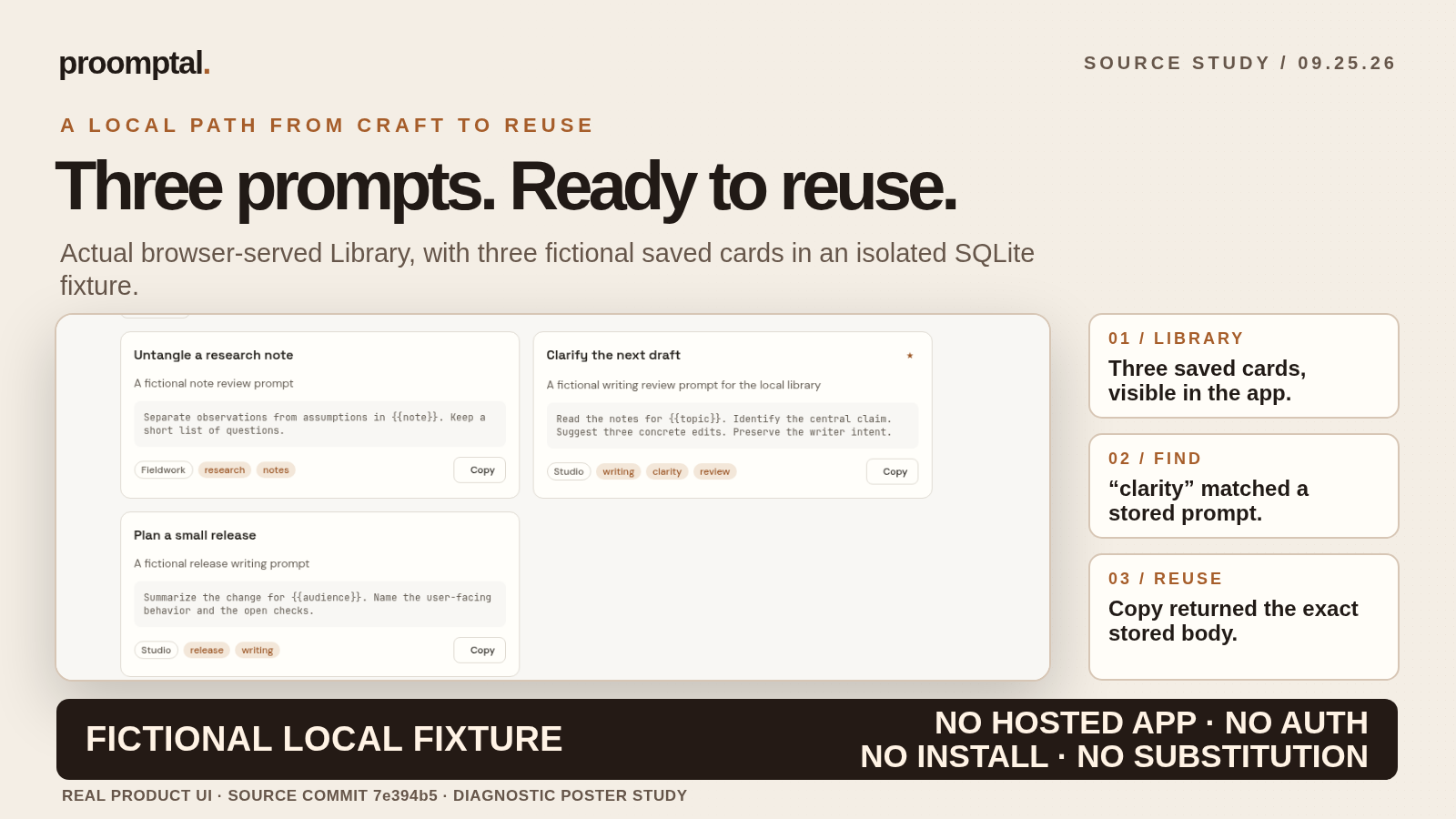
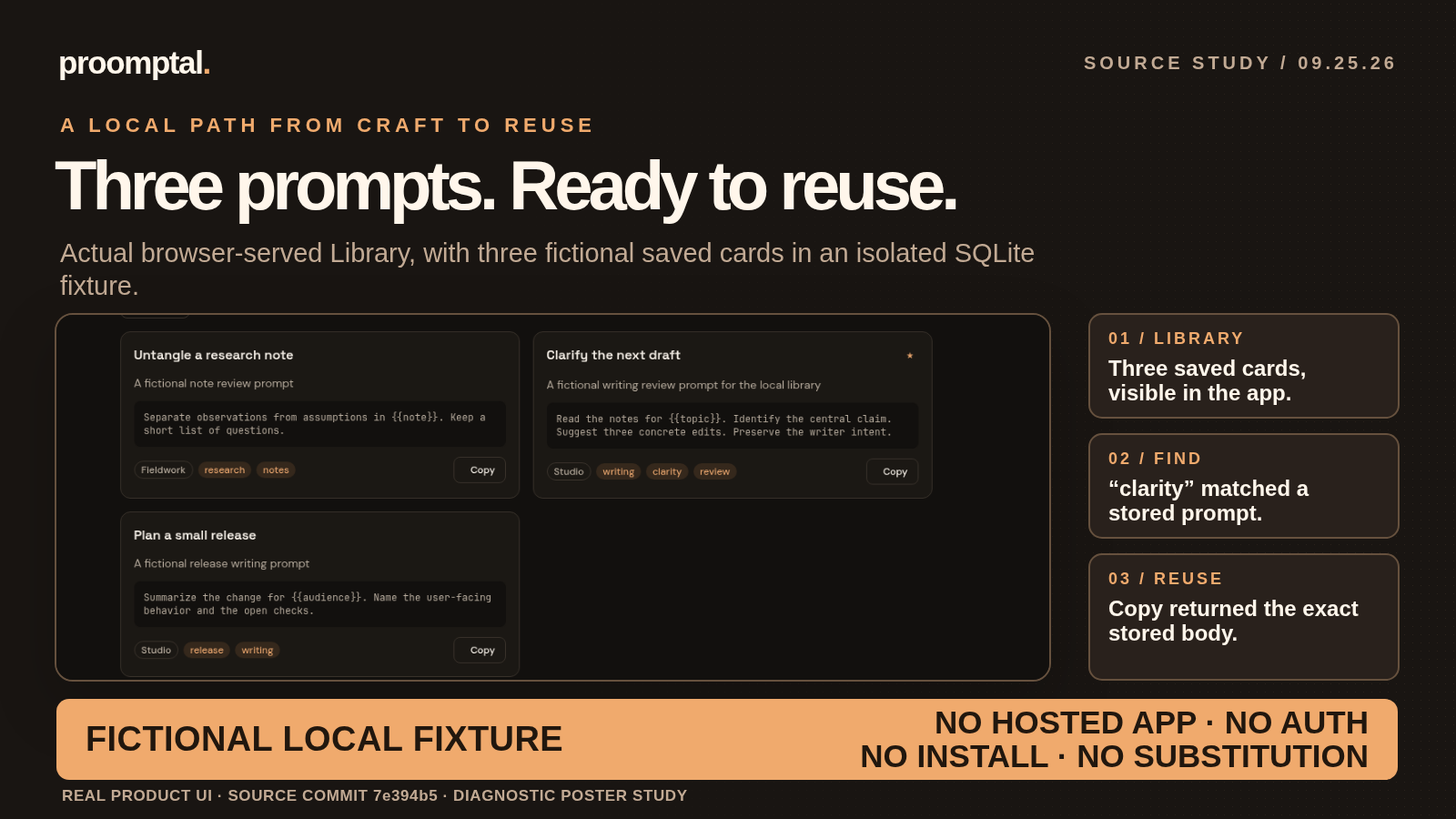
A reviewed annotated poster study built from real Library pixels. Its search and copy callouts have separate UI, CLI and clipboard receipts; it is not the final narrated-film cover. 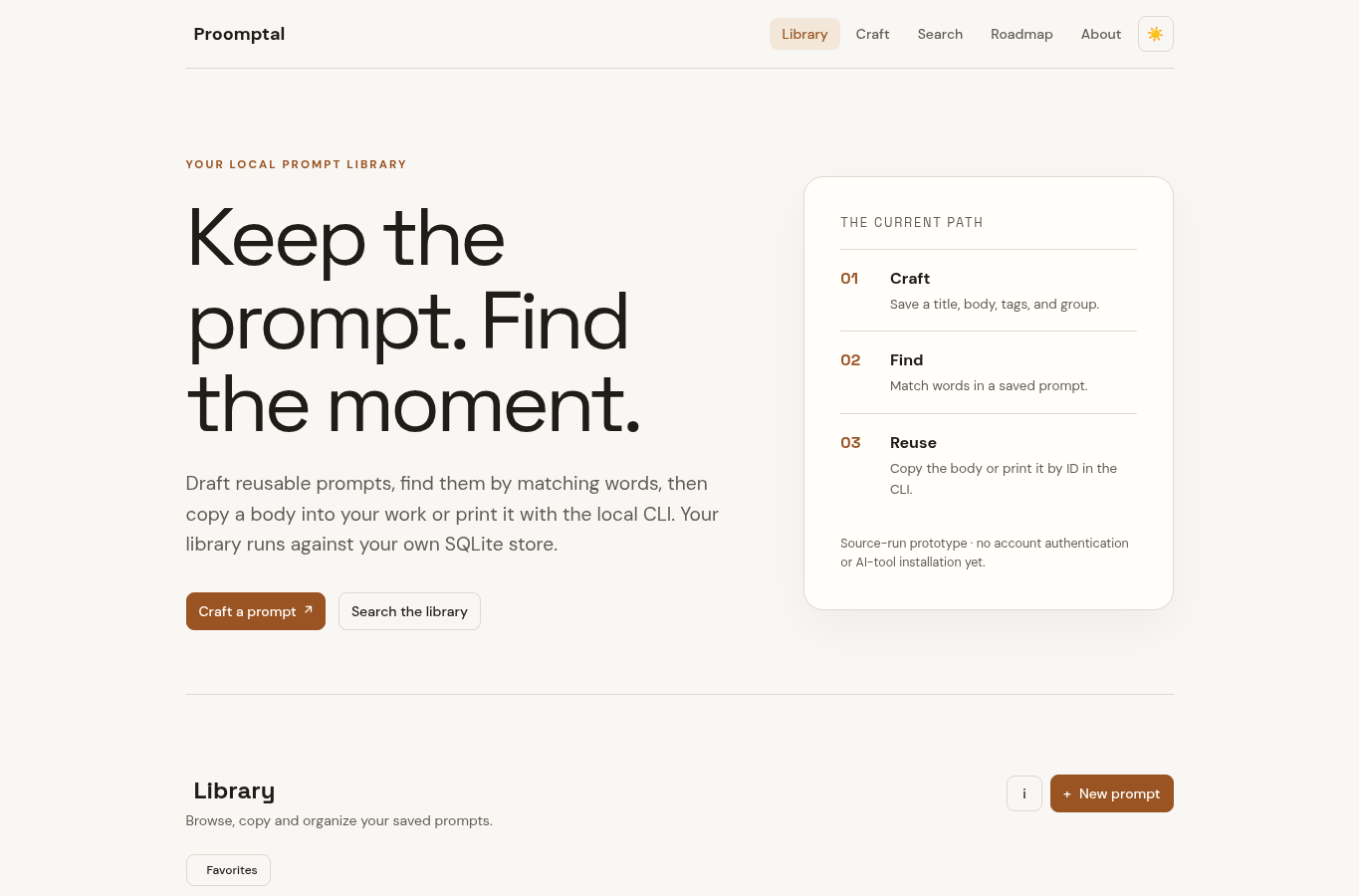
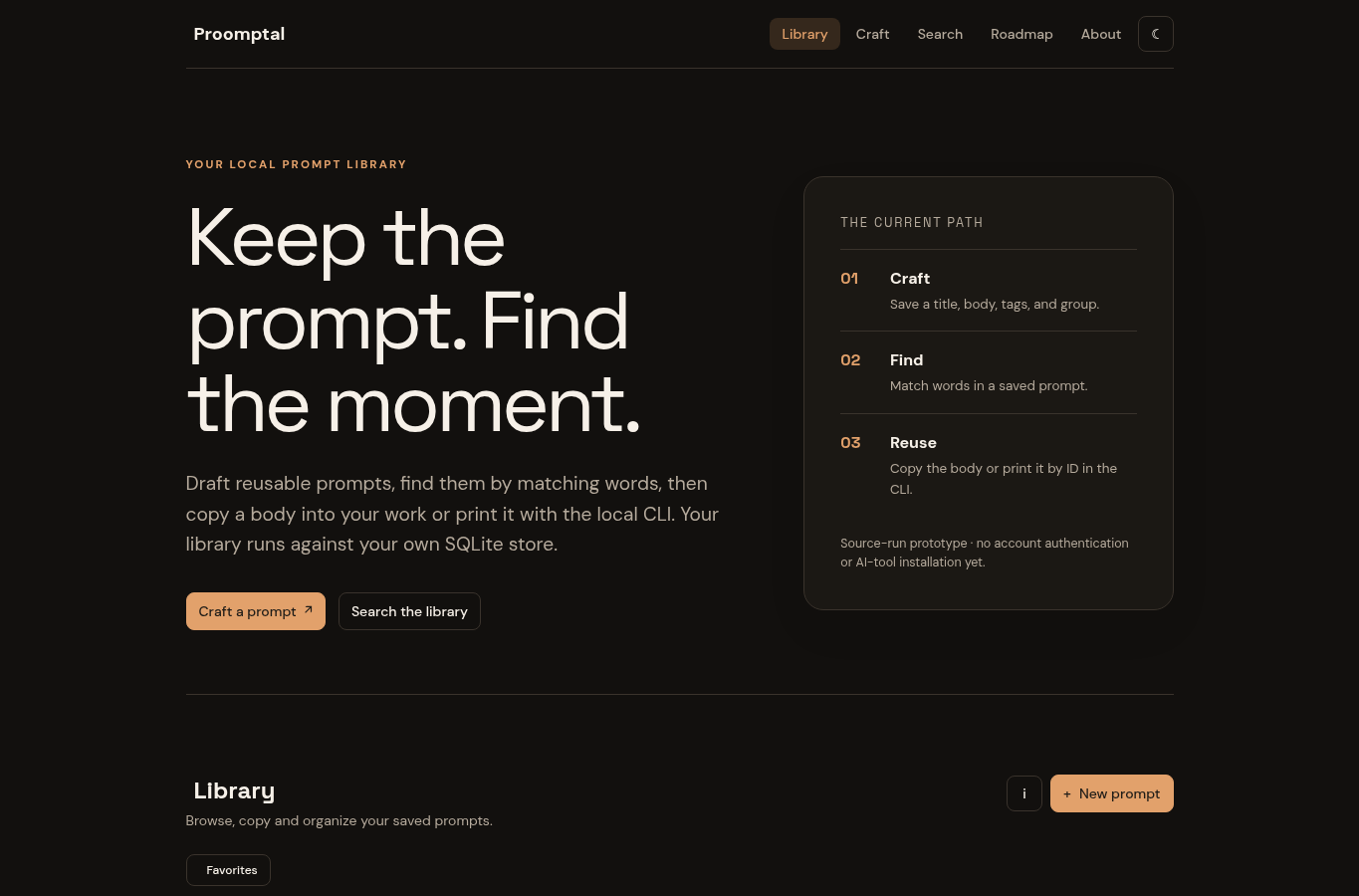
The actual app's first viewport explains Craft → Find → Reuse. Saved cards sit below this fold; the next pair shows them. 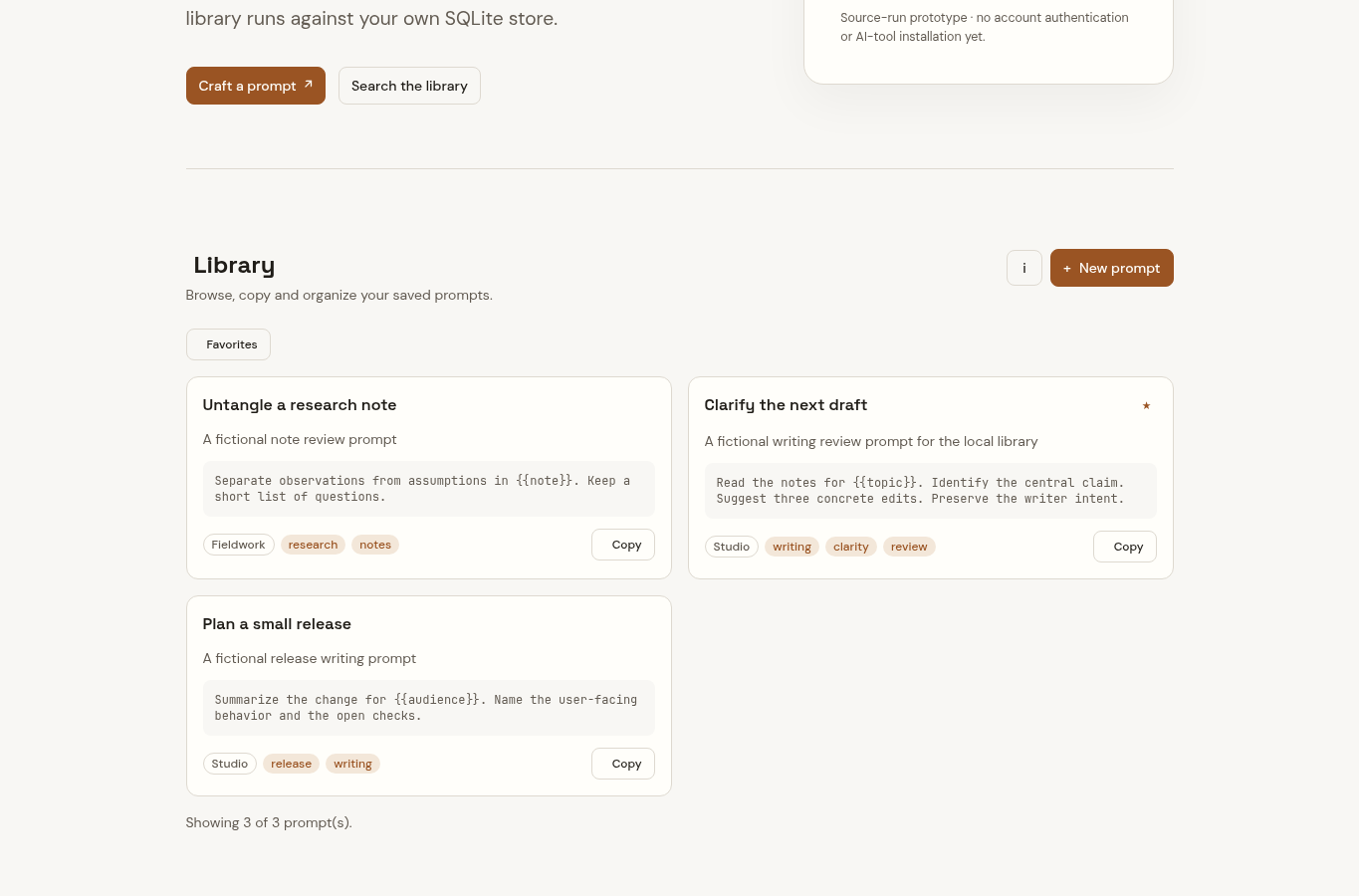
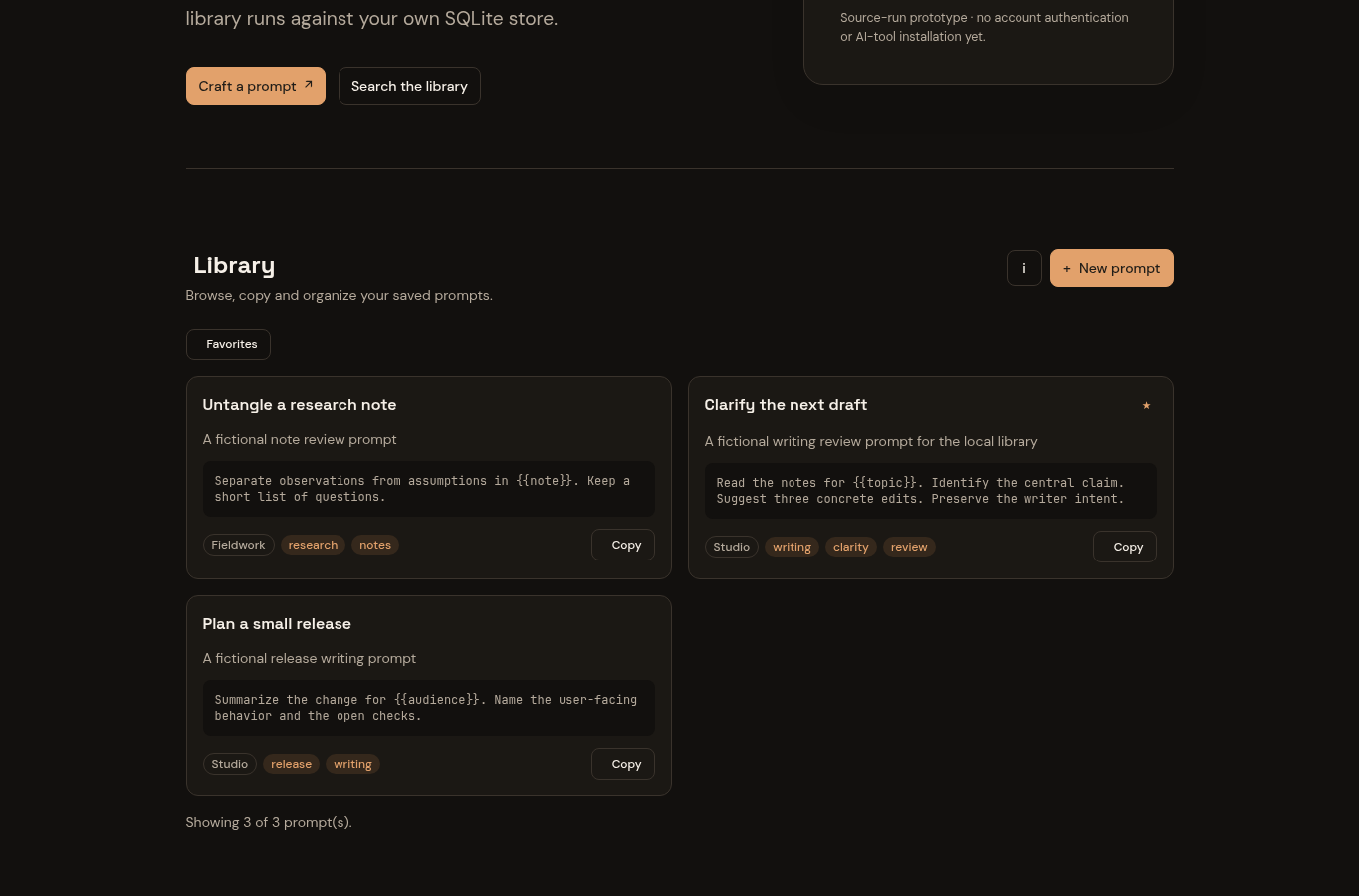
A separate scroll on the same local app shows all three stored fictional cards and the real 3-of-3 count. 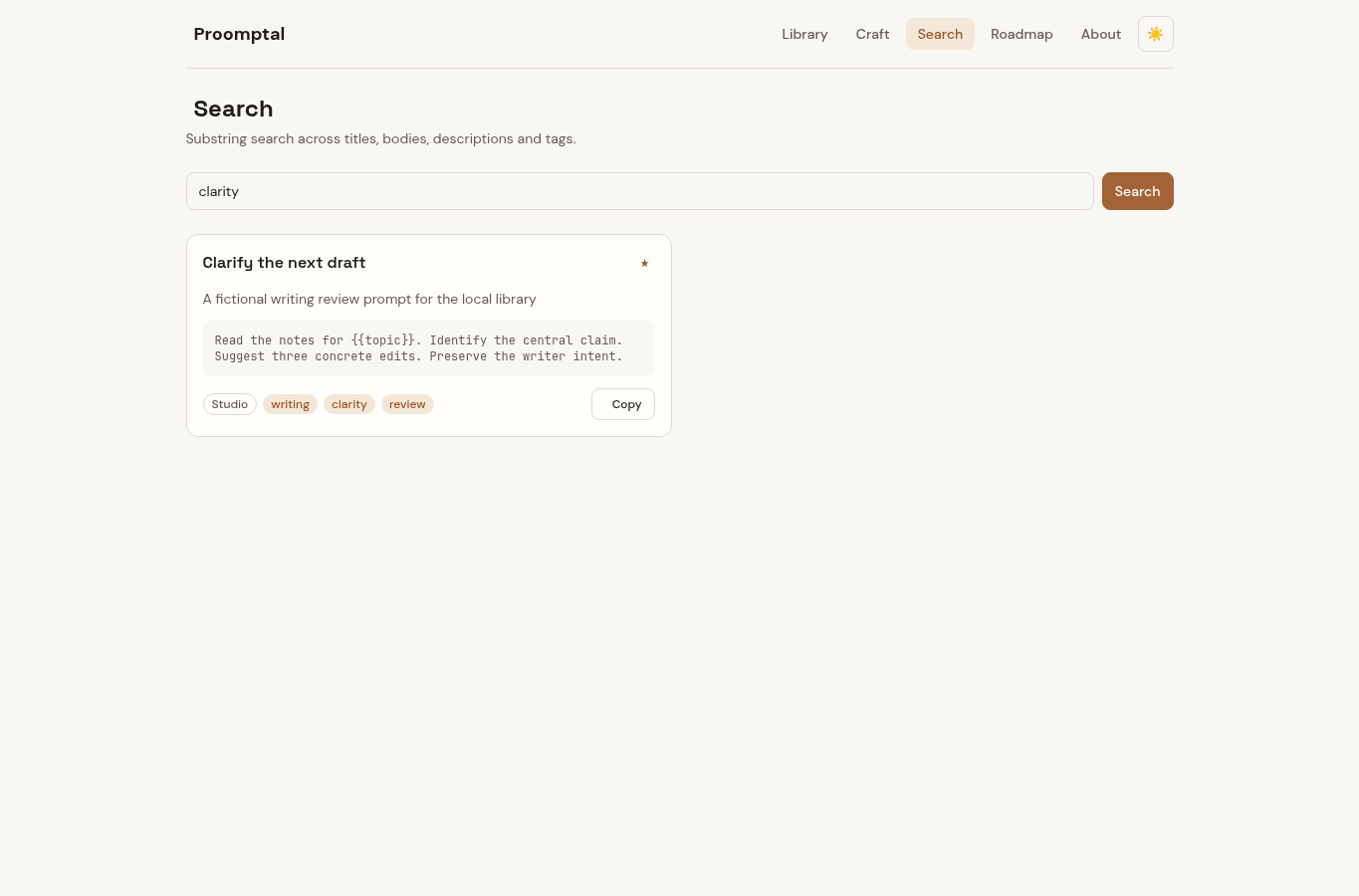
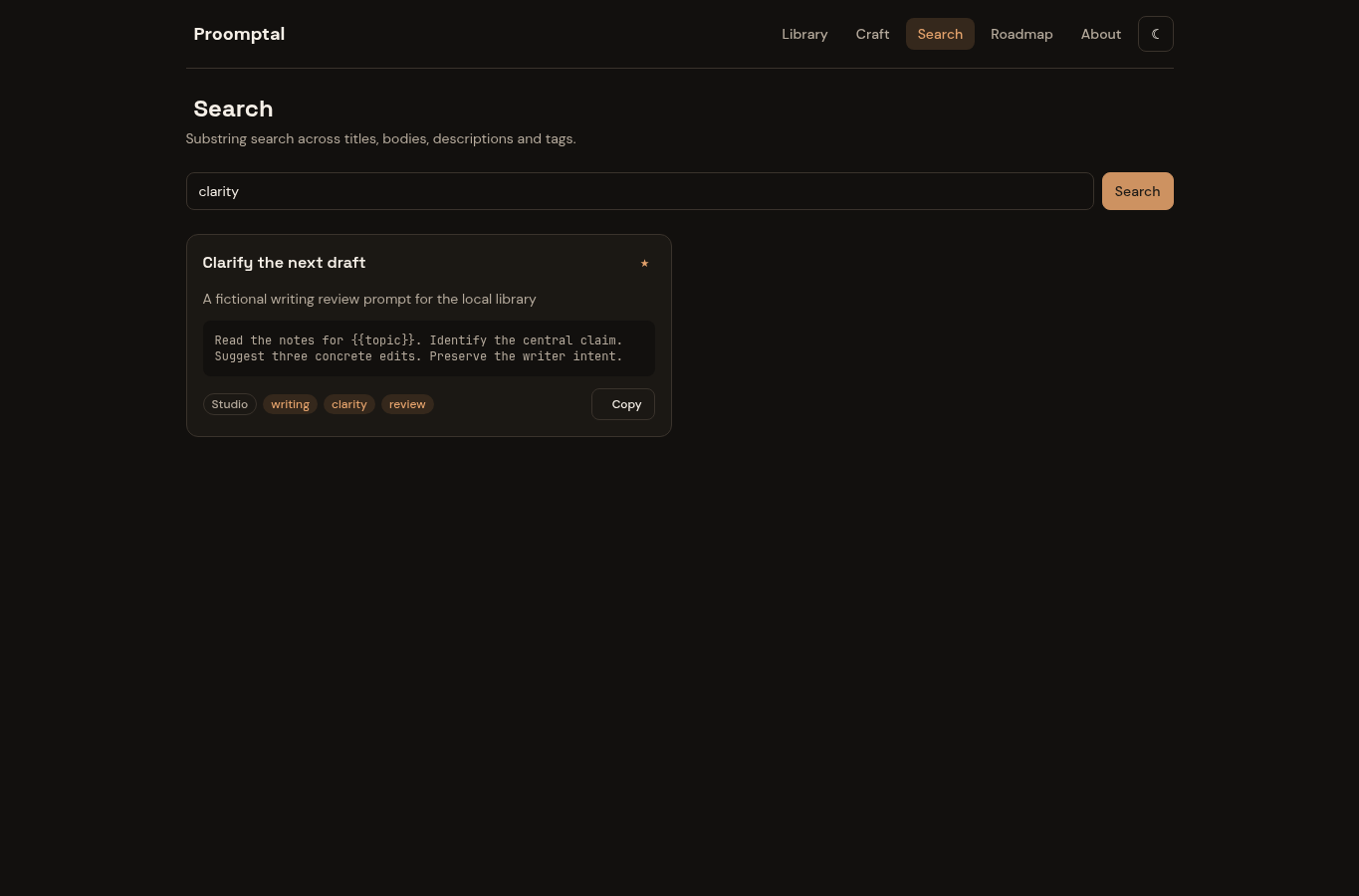
Searching for ‘clarity’ returned the stored fictional prompt. The source matches substrings in prompt fields, not semantic similarity. 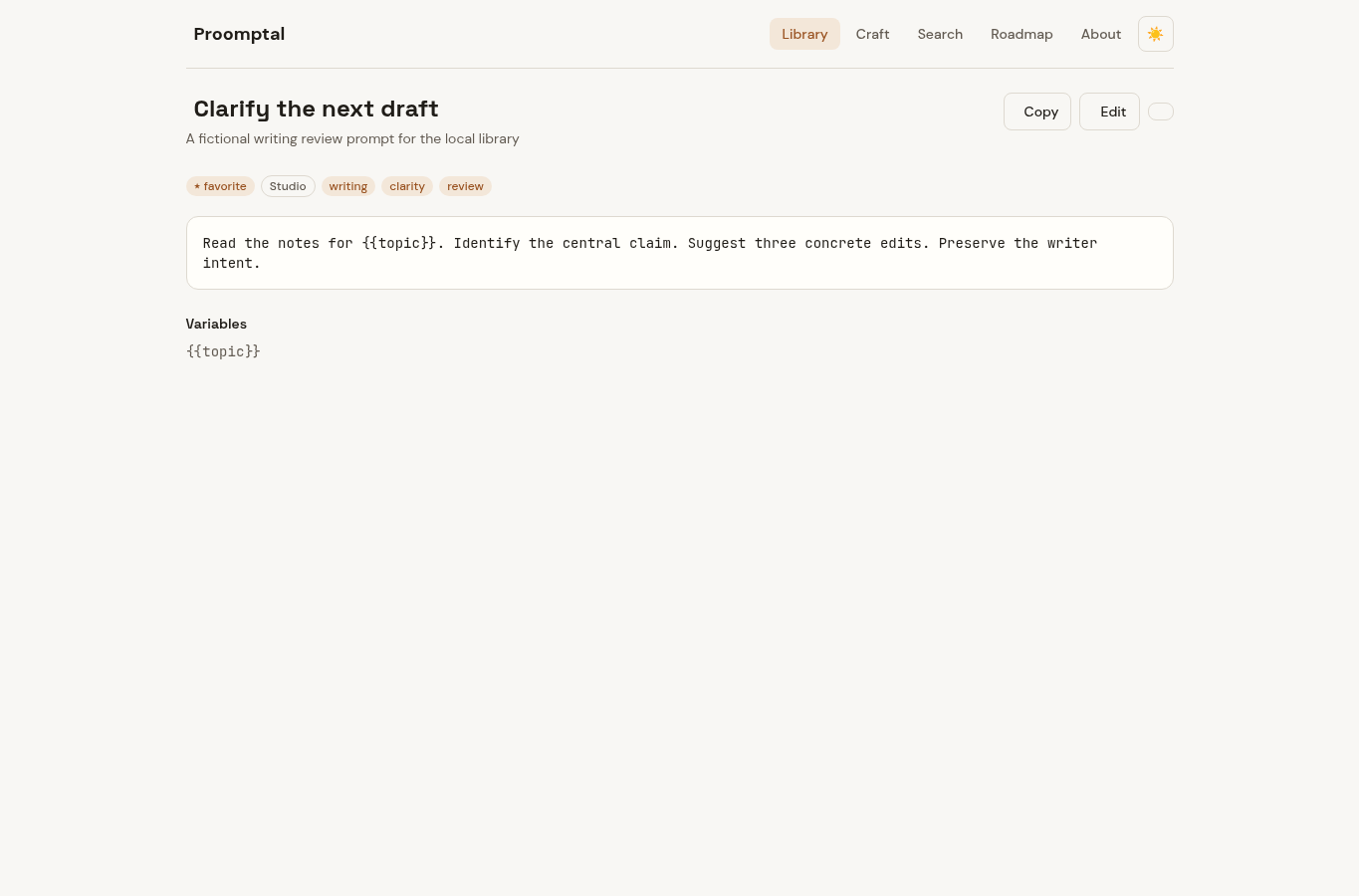
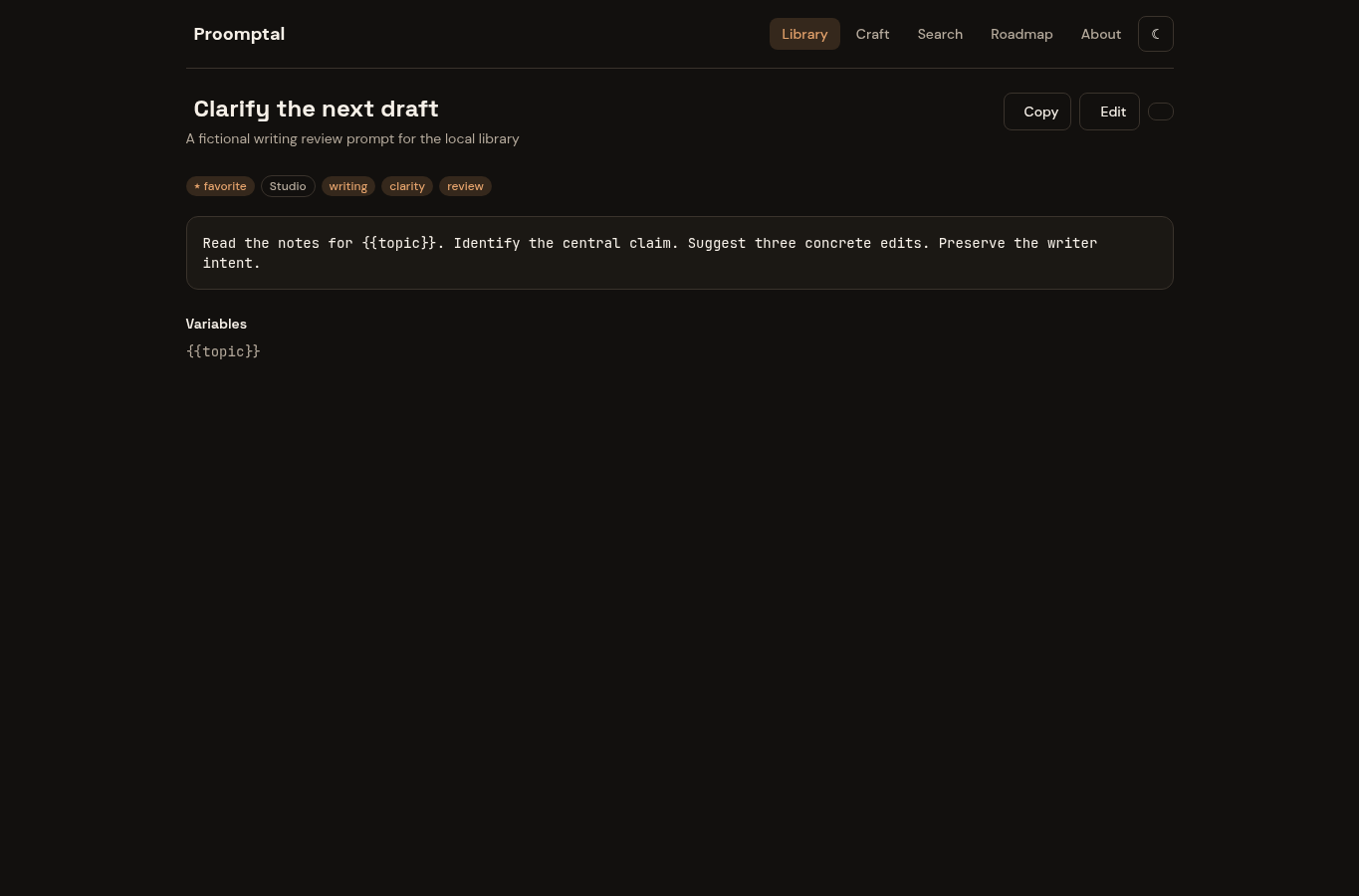
The detail view shows the exact saved body and detected topic placeholder name. The app does not substitute a value. 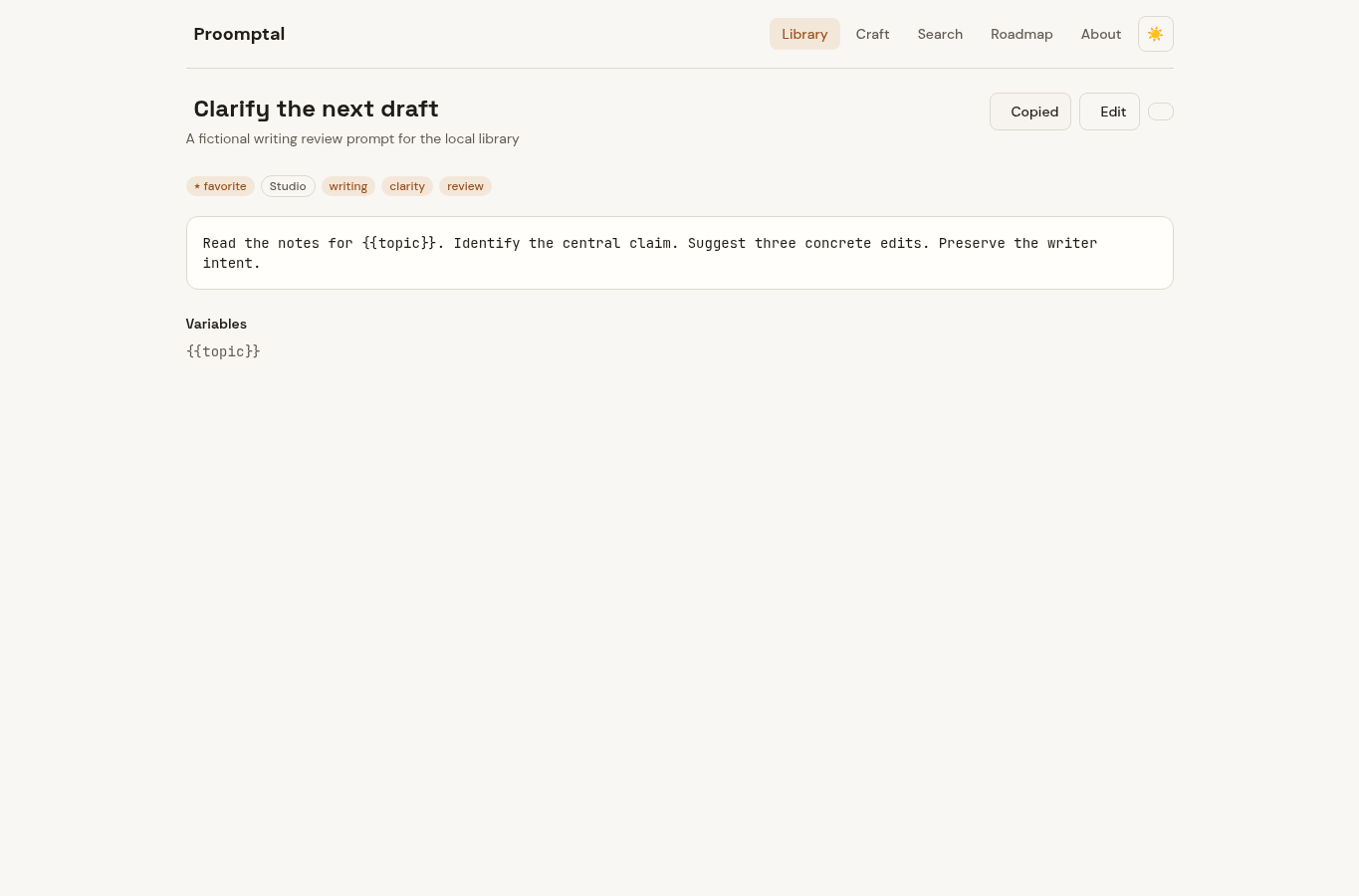
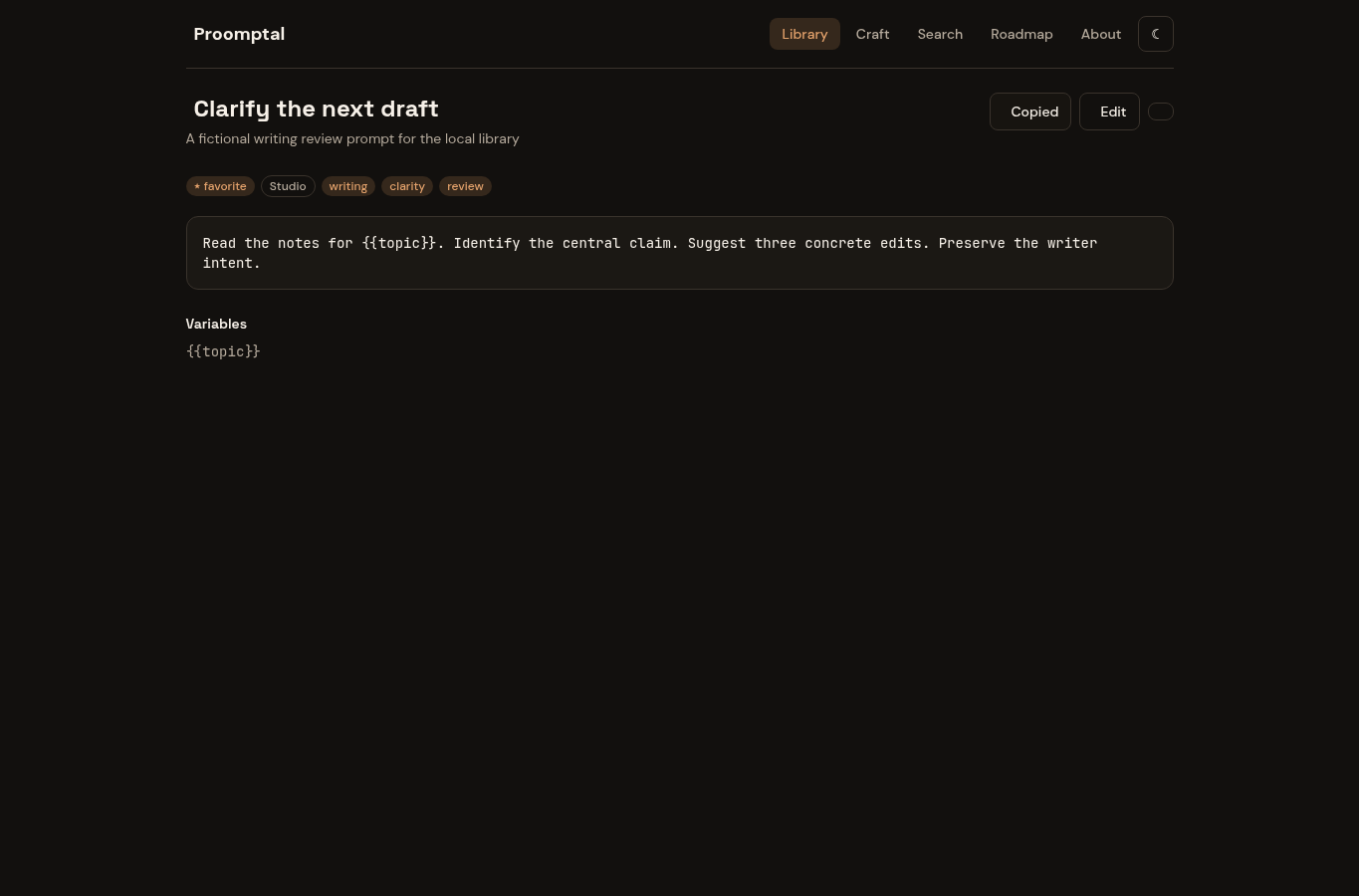
The app entered its Copied state; browser clipboard readback matched the stored body byte for byte in both themes. The light-theme raw interaction video and dark-theme raw interaction video are short silent actual browser recordings of entry → search → detail → copy. They begin on the first-view hero, not the populated cards; the dark raw clip includes a brief real loading frame and compression. The paired Library stills separately prove the saved-card state. These raw videos are diagnostic footage, not polished, narrated or captioned release films.
The same fictional SQLite fixture was listed, searched and shown by the Bun CLI; its exact text output, browser/API receipts and all media hashes are preserved with the media source. No packaged AI-tool installation, prompt revision history, semantic search, cross-device sync or hosted account is demonstrated. Cartesia narration, Remotion light/dark final films, timed captions and a final approved cover remain open.
-
· added
Local prompt-library foundation
This source milestone joined the local SvelteKit library, Bun API, SQLite store, and CLI. The current app can create and edit prompts, organize them with tags, groups and favorites, search prompt fields by substring, and copy a saved body. The local CLI can add, list, search, and print a body by ID.
The old paired stills showed an empty library screen, not a verified populated prompt workflow. Their visible “ready to deploy” line also implied an install path that is not implemented. They are withdrawn while real matched light/dark captures, narrated films, annotations, captions, and posters are produced. AI-tool installation, semantic search, prompt revisions, and cross-device sync remain future work. The current API has no account authentication; use a trusted local environment and review its network exposure before storing sensitive prompts.