Clipwell
Your clipboard history, queryable by anything
A fast, cross-platform clipboard-history service built as a headless daemon any app can query, listen to, and drive — with native and web pickers, a global hotkey, MCP, and a plugin system.
Visit Clipwell → View the changelog →Getting started
Read Clipwell quick-start →Requirements
- .NET 10 SDK to build and run the daemon and native picker from source
- wl-clipboard on Wayland or xclip on X11 for Linux clipboard polling
Things to know
- macOS paste-back requires Accessibility permission
- Pure Wayland uses the tray instead of a global hotkey; X11 paste-back requires xdotool
- Native clipboard, hotkeys and paste-back depend on platform permissions and the desktop session
Vision
The clipboard is the most-used feature in computing and the least respected — a single slot that forgets everything the moment you copy again. Clipwell treats clipboard history as a first-class, queryable service: a headless daemon that watches, types, and stores everything you copy, then exposes it over a real API so the picker, the CLI, editor extensions, and AI agents are all just clients of the same contract. Your clipboard stops being a black box and becomes something you can search, script, and build on.
The Problem
Clipboard managers are everywhere, but they're dead ends — closed apps that hoard your history behind a proprietary UI with no way to query it, automate it, or let an agent use it. They're also single-platform and single-purpose. Meanwhile the data is genuinely useful: the link you copied an hour ago, the snippet you reuse daily, the token you pasted into three terminals. None of it is reachable by the tools that could act on it.
Key Differentiators
- Queryable by anything: REST for one-shot calls, WebSocket/SSE to live-stream changes, and MCP so AI agents can read and act on your history.
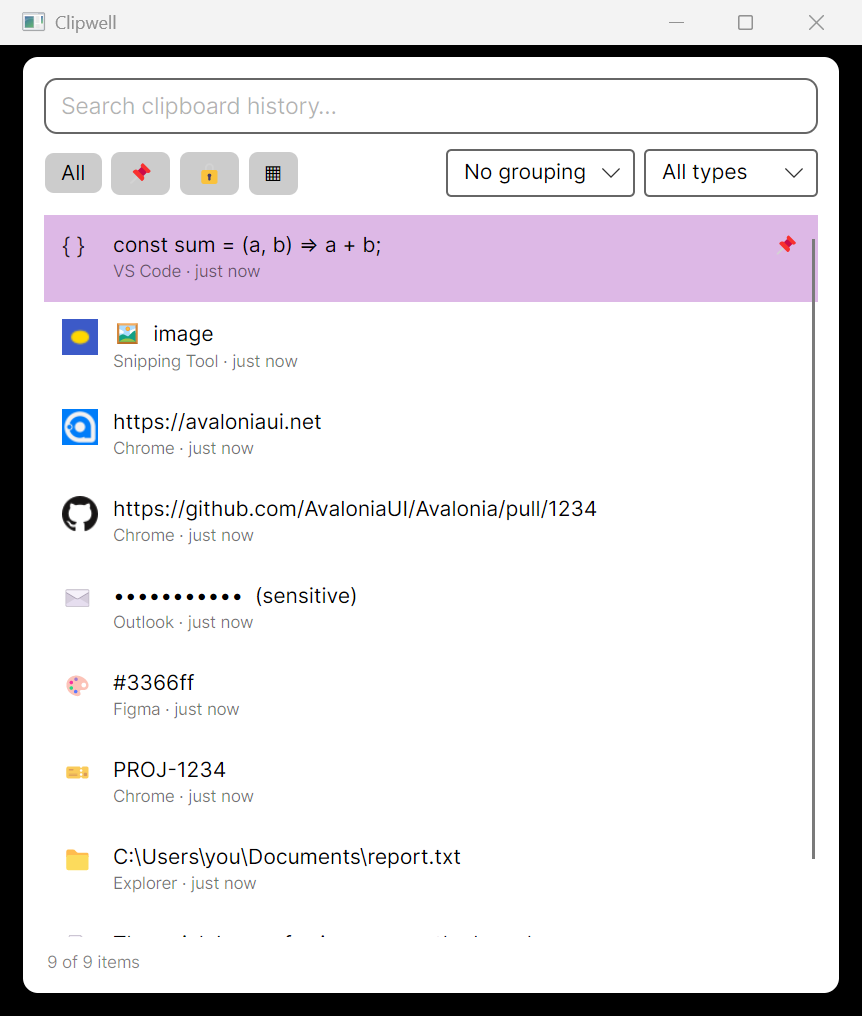
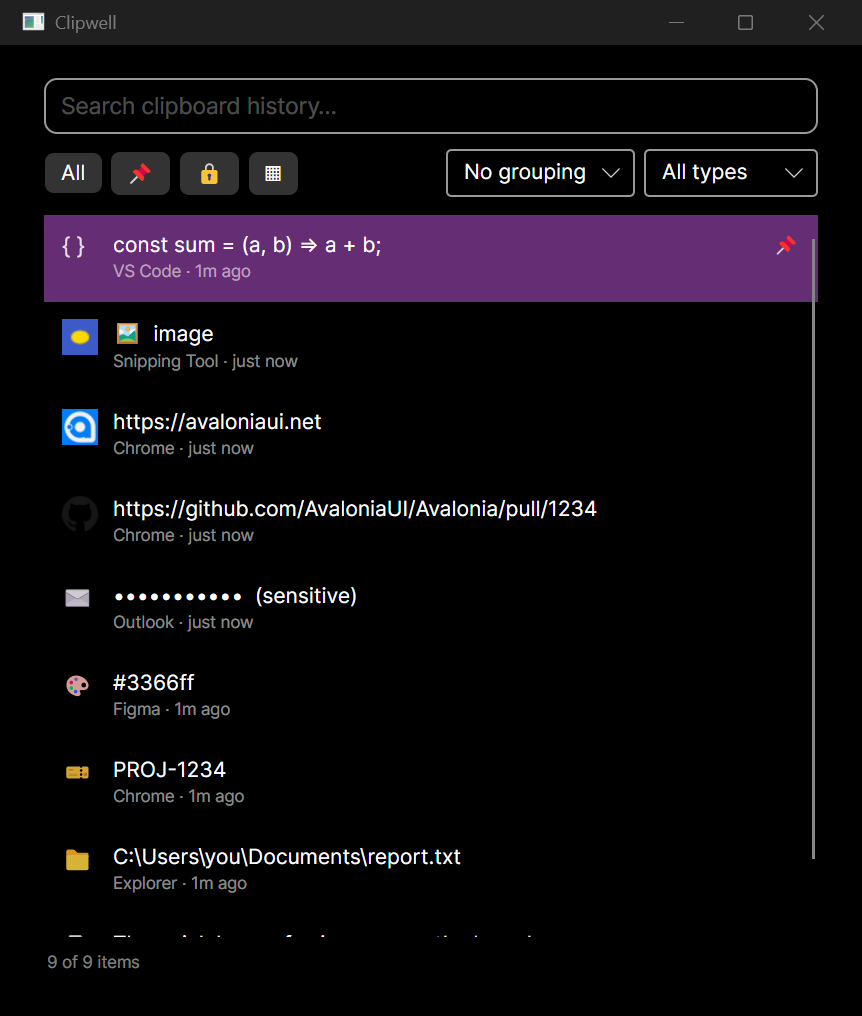
- Two pickers, one daemon: a native Avalonia picker and a Solid + Tauri web UI (also openable in any browser), both thin clients of the same API.
- Fast by design: the picker is pre-warmed and shows in a single frame on the global hotkey.
- Local-first: history lives in a local database on your machine. Flagged sensitive items are masked in the picker and omitted from MCP list and search tools; the full REST API remains available to local clients.
- Extensible: typed detectors and content-aware actions load as plugins, so the set of item kinds and what you can do with them keeps growing.